
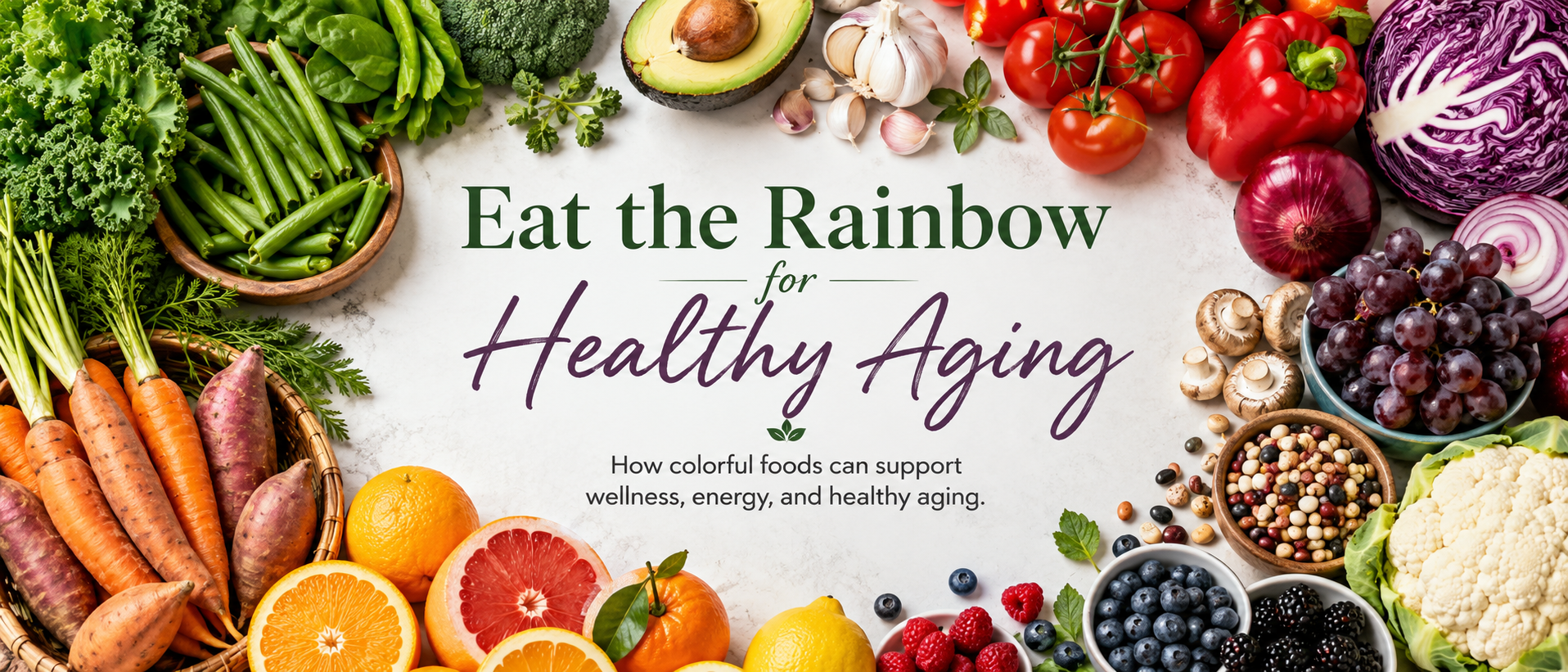
Food color can be a wonderfully simple way to add variety to the plate. Red tomatoes, orange squash, leafy greens, purple cabbage, white beans, and mushrooms each bring a different mix of nutrients and natural plant compounds.
But "eat the rainbow for healthy aging" should be understood as a shopping and meal-planning tool, not as a promise that one color prevents or cures a particular disease.
For older adults, the strongest evidence supports the bigger picture: choosing a varied, nutrient-dense eating pattern that regularly includes fruits, vegetables, beans, whole grains, and other minimally processed foods. The National Institute on Aging recommends variety across the food groups as a foundation of healthy aging. Good nutrition is also one of the everyday building blocks of aging in place safely and comfortably at home.
Brightway takeaway: Color helps us remember variety. Variety helps us obtain a broader range of fiber, vitamins, minerals, and plant compounds.
Why colorful foods may matter more as we age
As we get older, nutrition can become more complicated. Appetite may decrease. Chewing, swallowing, shopping, cooking, medication interactions, chronic illness, and limited budgets can all affect food choices.
Colorful plant foods may help by contributing:
- Fiber, which supports bowel regularity and cardiovascular health
- Potassium and magnesium, found in many fruits, vegetables, beans, and greens
- Vitamins A, C, K, and folate
- Carotenoids, anthocyanins, and other plant compounds
- Flavor, texture, and visual appeal that can make meals more inviting
Research has linked higher fruit and vegetable intake with a lower risk of frailty in older adults1. That does not prove that produce alone prevents frailty, but it supports making plant foods a regular part of meals.
Red foods: tomatoes, red peppers, watermelon, and more
Red foods may contain lycopene, anthocyanins, vitamin C, or a combination of these nutrients and compounds.
Examples include:
- Tomatoes and tomato sauce
- Red bell peppers
- Watermelon
- Pink grapefruit
- Red apples
- Red beans
Potential healthy-aging benefits
Tomatoes and watermelon are well-known sources of lycopene, while red peppers provide vitamin C and carotenoids. These foods can contribute to an eating pattern that supports cardiovascular health, tissue repair, and normal immune function.
A useful reminder: cooked tomatoes and tomato products can be nutritious choices, but canned sauces may contain considerable sodium. Check the label when sodium is a concern.
Orange and yellow foods: carrots, squash, sweet potatoes, and citrus
Orange and yellow foods often contain carotenoids, including beta-carotene, as well as vitamin C and potassium.
Examples include:
- Carrots
- Sweet potatoes
- Pumpkin
- Butternut or acorn squash
- Oranges and tangerines
- Yellow bell peppers
- Peaches
Potential healthy-aging benefits
The body can convert beta-carotene into vitamin A, which supports normal vision and immune function. Many orange vegetables are also easy to roast, mash, puree, or cook until tender — helpful for people who have difficulty chewing.
Sweet potatoes and winter squash offer fiber and can be prepared without much added sugar or salt.
Green foods: broccoli, leafy greens, peas, green beans, and avocado
Green foods can provide folate, vitamin K, magnesium, fiber, and eye-supporting carotenoids such as lutein and zeaxanthin.
Examples include:
- Broccoli
- Kale, collards, and spinach
- Green beans
- Peas
- Zucchini
- Avocado
- Cabbage
- Fresh herbs
Potential healthy-aging benefits
Green vegetables can support bone health, normal blood clotting, digestion, and overall nutrient intake. Some leafy greens contain lutein and zeaxanthin, compounds concentrated in the eye.
Important medication note
People who take warfarin are generally advised to keep vitamin K intake consistent rather than suddenly eating much more — or much less — leafy green food. Medication and diet questions should be discussed with the prescribing clinician or pharmacist.
Blue and purple foods: grapes, plums, purple cabbage, and eggplant
Blue and purple plant foods often get their color from anthocyanins, a family of flavonoid compounds.
Examples include:
- Purple grapes
- Plums
- Purple cabbage
- Eggplant skin
- Black beans
- Blueberries and blackberries
- Dark cherries
What does the research show?
Anthocyanins are being studied for possible effects on cognition and blood-vessel function. Reviews of randomized trials have found some promising results, including possible improvement in processing speed and certain memory measures2. However, benefits have not been consistent across all areas of cognition, and results for blood pressure and vascular markers are mixed3.
That means purple foods are nutritious additions to the diet — but they are not proven treatments for dementia, memory loss, or cardiovascular disease.
For people who do not enjoy berries, purple cabbage, grapes, plums, eggplant, black beans, and dark cherries offer other ways to include these colors.
White, tan, and brown plant foods still count
"Eat the rainbow" can accidentally make pale foods sound unimportant. They are not.
Examples include:
- Cauliflower
- Onions and garlic
- Mushrooms
- White beans and chickpeas
- Oats, barley, and other whole grains
- Potatoes
- Parsnips
Potential healthy-aging benefits
Beans contribute fiber and plant protein. Mushrooms provide a range of micronutrients. Onions and garlic contain sulfur-containing compounds. Cauliflower offers vitamin C and fiber.
Color is only one clue. A food does not need to be brightly colored to be nutritious.
The strongest message for older adults
The best-supported lesson is not that every color has one guaranteed health effect. It is that regularly eating a variety of fruits and vegetables is associated with better healthy-aging outcomes.
Systematic reviews have found associations between higher fruit and vegetable intake and lower frailty risk4. Research has also linked higher produce intake with healthier cognitive aging, although observational studies cannot prove cause and effect.
A realistic goal is not to eat every color at every meal.
Try this instead
Aim for three plant colors across the day, then vary those choices through the week.
For example:
- Breakfast: oatmeal with sliced peach and walnuts
- Lunch: white-bean soup with carrots and greens
- Dinner: chicken or fish with broccoli, purple cabbage slaw, and sweet potato
- Snack: an apple, grapes, hummus with peppers, or a small handful of unsalted nuts
Frozen and canned foods count, too
Fresh produce is not the only healthy option.
Frozen vegetables and fruits can be convenient, affordable, and easier to keep on hand. Canned beans, vegetables, and fruit can also be useful.
Look for:
- Vegetables labeled no salt added or lower sodium
- Beans that can be drained and rinsed
- Fruit packed in water or juice rather than heavy syrup
- Frozen produce without sugary sauces or excessive sodium
For an older adult with a limited appetite, a small serving of several nutrient-dense foods may be more manageable than a very large plate.
When nutrition advice needs to be individualized
General "eat the rainbow" advice may need adjustment for someone with:
- Diabetes
- Kidney or heart disease
- Swallowing difficulties
- Poor dentition or difficulty chewing
- Food allergies
- Significant reflux or gastrointestinal disease
- Medication-food interactions
- Unintentional weight loss or poor appetite
A physician, registered dietitian, speech-language pathologist, pharmacist, or dentist may need to be part of the plan, depending on the concern.
A simple Brightway challenge
At the grocery store — or while looking through the freezer and pantry — ask:
Which color have we not eaten much of this week?
Then choose one realistic addition. It could be frozen broccoli, a can of no-salt-added beans, a sweet potato, purple cabbage, an orange, or mushrooms.
Healthy aging is rarely built by one "superfood." It is built through repeatable choices that fit the person's health, preferences, abilities, culture, and budget.
Key points to remember
- Food color is a practical reminder to choose variety.
- More color does not automatically mean more nutrition; white beans, mushrooms, onions, and cauliflower are valuable, too.
- Fruits and vegetables are associated with lower frailty risk, but no single color prevents disease.
- Purple and blue foods contain anthocyanins, which have promising — but not conclusive — research related to cognition.
- Frozen and canned produce can be nutritious and budget-friendly.
- Older adults with medical conditions, swallowing concerns, or medication interactions may need individualized guidance.
Medical disclaimer: This article provides general educational information and is not a substitute for individualized medical, nutrition, or medication advice.
Sources
- National Institute on Aging. Healthy eating, nutrition, and diet.
- Kojima G, Taniguchi Y, Urano T. Fruit and Vegetable Consumption and Incident Frailty in Older Adults: A Systematic Review and Meta-Analysis. Journal of Frailty & Aging. 2022. PMID: 35122090.
- Ghoreishy SM, et al. Fruit and vegetable intake and risk of frailty: A systematic review and dose-response meta-analysis. Ageing Research Reviews. 2021. PMID: 34534684.
- Feng RC, et al. Effects of anthocyanin-rich supplementation on cognition of cognitively healthy middle-aged and older adults. Nutrition Reviews. 2023. PMID: 35960187.
- Ellis LR, Boesch C, Dye L. Effects of Anthocyanins on Cognition and Vascular Function: A Systematic Review. Molecular Nutrition & Food Research. 2024. PMID: 38961529.
- National Institute on Aging. Vitamins and Minerals for Older Adults.